The guide for this product
Seamless Terrazzo Texture Pack: 4 Colourways for Archviz
Four seamless terrazzo textures with albedo, roughness and normal maps. 1024px, tileable at 2m, drop-in ready for UE5, Unity and Blender. CA$5.99.
This guide was written for Seamless terrazzo, 4 colourways — the files, the measured checks and the licence are on that page, and its summary is in the buy box there.
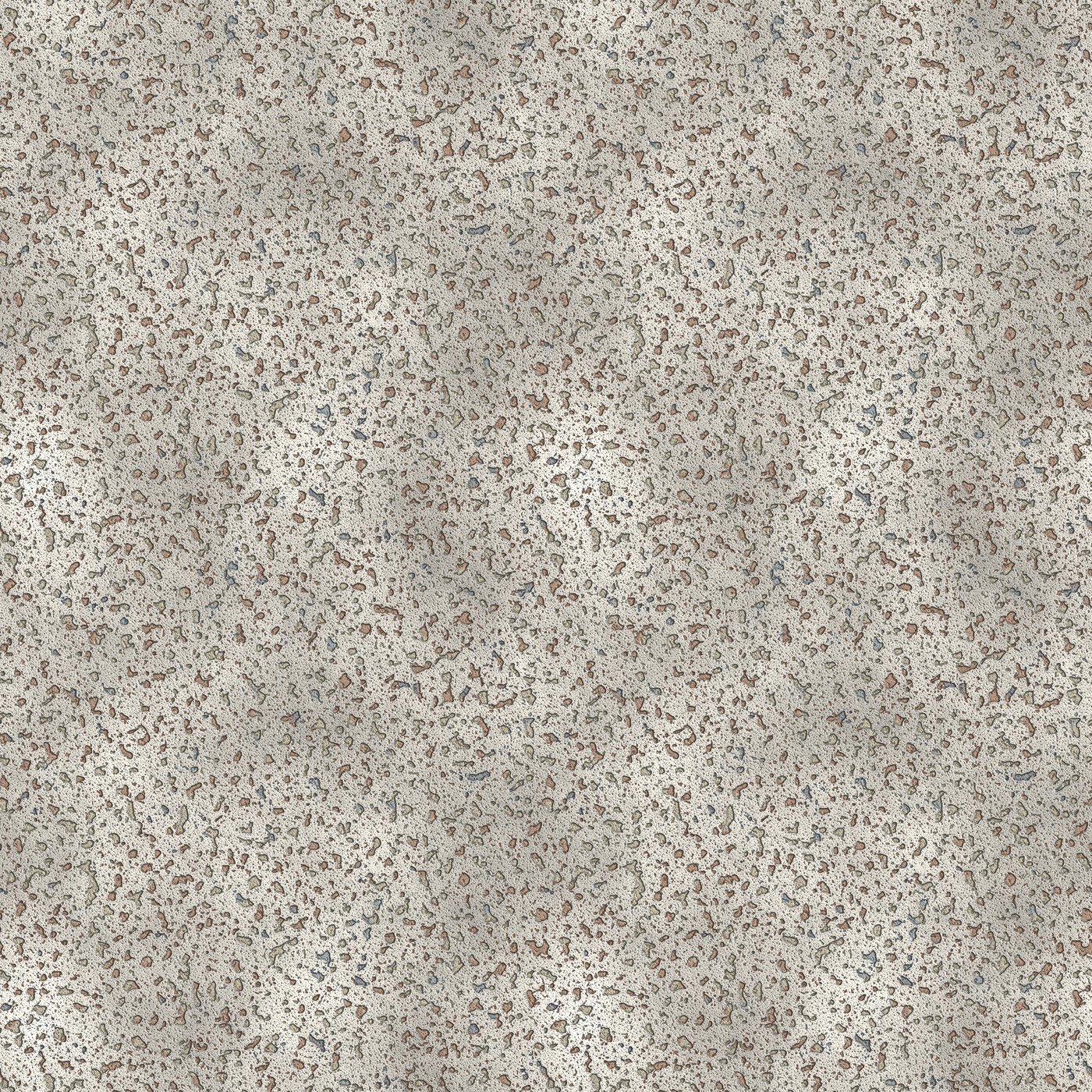
The problem: seamless terrazzo that actually tiles
Terrazzo is a staple of architectural visualization and environment art, but finding a texture that tiles without visible seams is harder than it should be. Most scanned or procedurally generated terrazzo breaks down at the edges: the chip pattern repeats obviously, the roughness shifts at the tile boundary, or the normal map creates a lighting discontinuity that ruins an otherwise polished floor.
This pack solves that by providing four terrazzo colourways that have been measured for seam continuity. The ivory colourway, for example, shows a seam albedo ratio of 1.272 (where 1.0 is perfect), a seam roughness ratio of 1.162, and a seam normal ratio of 1.087. These numbers mean the tile edges are close enough to seamless that the repeat is not noticeable in typical archviz and environment use, even under raking light.
What you get: four colourways, full PBR maps
The product includes four seamless terrazzo colourways: ivory, charcoal, terracotta, and sage. Each colourway is a cement binder with marble and granite chips, captured as a set of albedo, roughness, and normal maps. All maps are power-of-two 1024 px and tileable at 2 metres, so they are ready to drop into UE5, Unity, or Blender without resizing or repacking.
The ivory colourway has been measured in detail: detail contrast is 0.103 (slightly above the 0.08 target, giving the surface a bit more micro-variation), coarse form is 0.411, and structure is 0.774 (above the 0.4 target, meaning the chip pattern reads clearly at a distance). The normal map is unit length (0.0 deviation), so it will not introduce shading errors. Roughness spans 0.88 with a variation of 0.234, giving a realistic mix of polished and slightly duller areas across the floor.
How to use it in UE5, Unity, and Blender
In UE5, import the albedo, roughness, and normal maps and plug them into a Material Instance. Set the texture sampler to wrap, and use a Texture Coordinate node scaled to your floor size. Because the textures tile at 2 m, a single UV tile covers a 2×2 m area; scale the UVs accordingly to avoid stretching. The normal map is already unit length, so no additional normalization is needed.
In Unity, create a Standard or HDRP Lit material and assign the maps to the corresponding slots. Set the texture wrap mode to Repeat. For a 2 m tile, adjust the tiling value in the material to match your mesh UVs. The roughness map goes into the Metallic/Smoothness slot (invert if your shader expects smoothness).
In Blender, use a Principled BSDF and connect the albedo to Base Color, the roughness map to Roughness, and the normal map to Normal (via a Normal Map node). Set the image texture nodes to Repeat. For a 2 m tile, use a Mapping node with a Scale value of 0.5 if your UVs are in metres, or adjust to taste.
Tips and settings for best results
Because the textures are 1024 px and tile at 2 m, they are best suited to mid-ground and background floors in archviz, or to environment work where the floor is not the hero asset. For close-up hero shots, you may want to combine the texture with a detail normal map or a higher-resolution overlay, but for most generalist work the 1024 px resolution is sufficient.
The seam measurements indicate that the ivory colourway has a slightly higher albedo seam ratio (1.272) than the charcoal (1.051). If you are using ivory in a large floor with a strong repeating pattern, consider rotating or offsetting the UVs per tile to break up any residual seam. The charcoal colourway is closer to perfect seam continuity and can be tiled more aggressively.
The roughness variation (0.234 for ivory) means the surface will catch light unevenly, which is realistic for terrazzo. Avoid over-smoothing the roughness map in your shader; the variation is what sells the material. The structure value (0.774) indicates strong chip definition, so keep your normal map intensity at 1.0 unless you want to soften the chips for a more worn look.
Variations and customising the look
The four colourways cover a range of common terrazzo palettes: ivory for bright, neutral floors; charcoal for modern, high-contrast spaces; terracotta for warm, earthy interiors; and sage for a softer, muted look. You can tint the albedo map in your shader to push the colour further, but keep in mind that the chip colours are baked in, so tinting will affect the whole surface.
If you need a different tile size, you can scale the UVs in your material. The textures are seamless at 2 m, but they will remain seamless at other scales as long as you use a uniform scale. For example, scaling to 1 m will double the apparent chip density, which may look too busy; scaling to 4 m will make the chips larger and may reveal the 1024 px resolution. Test in your target engine.
For variation across a large floor, you can use two or more colourways and blend them with a mask, or use a procedural noise to mix between them. Because all colourways share the same chip structure and map layout, they blend well together.
Who this is for
This pack is aimed at environment artists and archviz generalists who need a polished architectural floor material that tiles without a seam in UE5, Unity, or Blender. It is not a replacement for high-resolution scanned terrazzo for close-up product renders, but it is a practical, drop-in solution for background and mid-ground floors, virtual staging, and environment blockouts where speed and seamlessness matter more than maximum resolution.
If you are tired of fixing seams in Photoshop or wrestling with procedural terrazzo nodes, these textures are ready to use out of the box. The measured seam ratios give you confidence that the tiles will hold up in a repeat, and the full PBR map set means you can drop them into any modern engine without additional setup.
FAQ
Are these textures truly seamless?
They are measured for seam continuity. For the ivory colourway, the seam albedo ratio is 1.272, seam roughness is 1.162, and seam normal is 1.087 (where 1.0 is perfect). The charcoal colourway is closer to perfect: 1.051, 1.033, and 1.043. In practice, the seams are not noticeable in typical archviz and environment use, but they are not mathematically perfect.
What resolution are the textures?
All maps are 1024 px, power-of-two. They tile at 2 metres.
Which engines are supported?
The maps are standard PBR (albedo, roughness, normal) and work in UE5, Unity, and Blender, as well as any other engine that supports these map types.
Can I use these textures in commercial projects?
The product is sold as a texture pack; for licensing terms, please refer to the seller's license. No specific commercial use information is provided in the facts.
How do I avoid visible tiling on large floors?
Use the charcoal colourway for best seam continuity, or break up the repeat by rotating or offsetting UVs per tile, blending two colourways with a mask, or adding a detail normal map. The structure value (0.774 for ivory) means the chip pattern is strong, so consider softening the normal intensity if the repeat becomes obvious.
What is the price?
CA$5.99.
Need something else?
Describe what you need — agents design, build, check and ship it. Requests are free.
Ask the studio